A header and hub lateral system is an advanced underdrain distribution structure used in filtration and water treatment applications. It consists of a central header or hub connected to multiple lateral pipes or arms, which are evenly spaced to distribute or collect fluid across the filter bed. This design ensures uniform flow distribution, efficient backwashing, and effective media support. Typically manufactured from stainless steel or engineered plastics, header and hub laterals are widely used in sand filters, activated carbon systems, and ion exchange vessels where consistent hydraulic performance and structural reliability are critical.
Hub laterals
Hub lateral is composed of several screen laterals and a central hub. The non-plugging spider hub style design is ideal for accommodating disc head vessels.The hub radial lateral assemblies has two ending types: threaded ending types and flange ending types.
Made to your specification for size, open area and material, you can expect easy maintenance and exceptional long-term durability.
No matter the final design, you can count on the performance of our hub or header lateral.
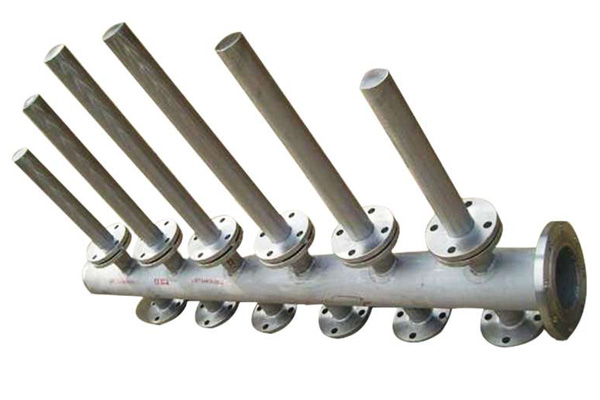
Header Laterals
Each header lateral consists of a series of screen laterals connected to a central header to provide uniform flow within a vessel containing treatment media. Header laterals can be used to either distribute inflow or collect flow, depending on their location within a vessel.
The wedge wire header lateral has two ending types: threaded ending types and flange ending types.
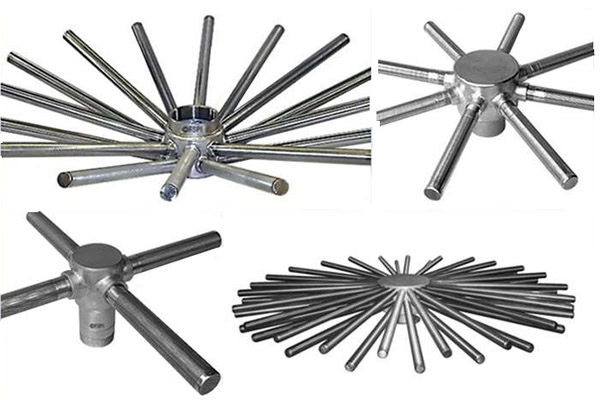
Header and Hub Lateral systems are widely used in industries that require uniform flow distribution and efficient filtration. Their robust structure and balanced hydraulic performance make them suitable for various applications:
1. Water Treatment Plants
Used in rapid sand filters and gravity filters to ensure even water distribution and effective backwashing in municipal and industrial water treatment systems.
2. Wastewater Treatment
Applied in tertiary filtration and sludge treatment processes, helping improve solid-liquid separation and prevent clogging.
3. Ion Exchange Systems
Commonly installed in ion exchange vessels for softening and demineralization, ensuring uniform flow through resin beds and preventing channeling.
4. Activated Carbon Filtration
Used in carbon filters for drinking water and industrial purification, supporting media retention and enhancing adsorption efficiency.
5. Industrial Filtration Systems
Widely used in industries such as:
Petrochemical
Power generation
Food & beverage
Mining
They help maintain stable filtration performance under demanding conditions.
6. Seawater Desalination
Applied in pre-treatment filtration systems to ensure consistent flow and protect downstream membranes.
7. Pressure and Gravity Filters
Suitable for both pressure vessels and open gravity filtration systems, offering flexibility in design and installation.
8. Media Retention Systems
Used wherever filter media (sand, anthracite, resin) must be securely retained while allowing efficient fluid passage.
FAQ: Header and Hub Lateral Systems
1. How do I choose between a header lateral and a hub lateral system?
The choice depends on vessel geometry and flow requirements. Hub laterals are typically preferred for central, radial flow in circular vessels, while header laterals are better suited for linear or elongated tanks requiring directional distribution or collection.
2. What are the most common failure issues in lateral systems?
Typical issues include uneven flow distribution, nozzle or lateral blockage, and mechanical fatigue at connection points. These problems are usually caused by improper sizing, poor slot selection, or inadequate backwash design.
3. Can Header and Hub Laterals handle high backwash pressure?
Yes, but only when properly engineered. The system must be designed with sufficient structural reinforcement, correct wall thickness, and appropriate material selection to withstand cyclic backwash stress.
4. What customization options are most important for performance?
Key customization factors include lateral length, open area design, slot configuration, and connection type. These directly influence flow balance, pressure drop, and overall system efficiency.
5. Are stainless steel systems better than plastic ones?
Stainless steel offers higher strength, better temperature resistance, and longer service life, making it suitable for harsh industrial environments. Plastic systems may be preferred for cost-sensitive or low-pressure applications.