In industrial filtration systems, filtration performance is not determined only by the filter cartridge itself. The housing that supports and directs the fluid flow also plays an important role in maintaining stable filtration efficiency.
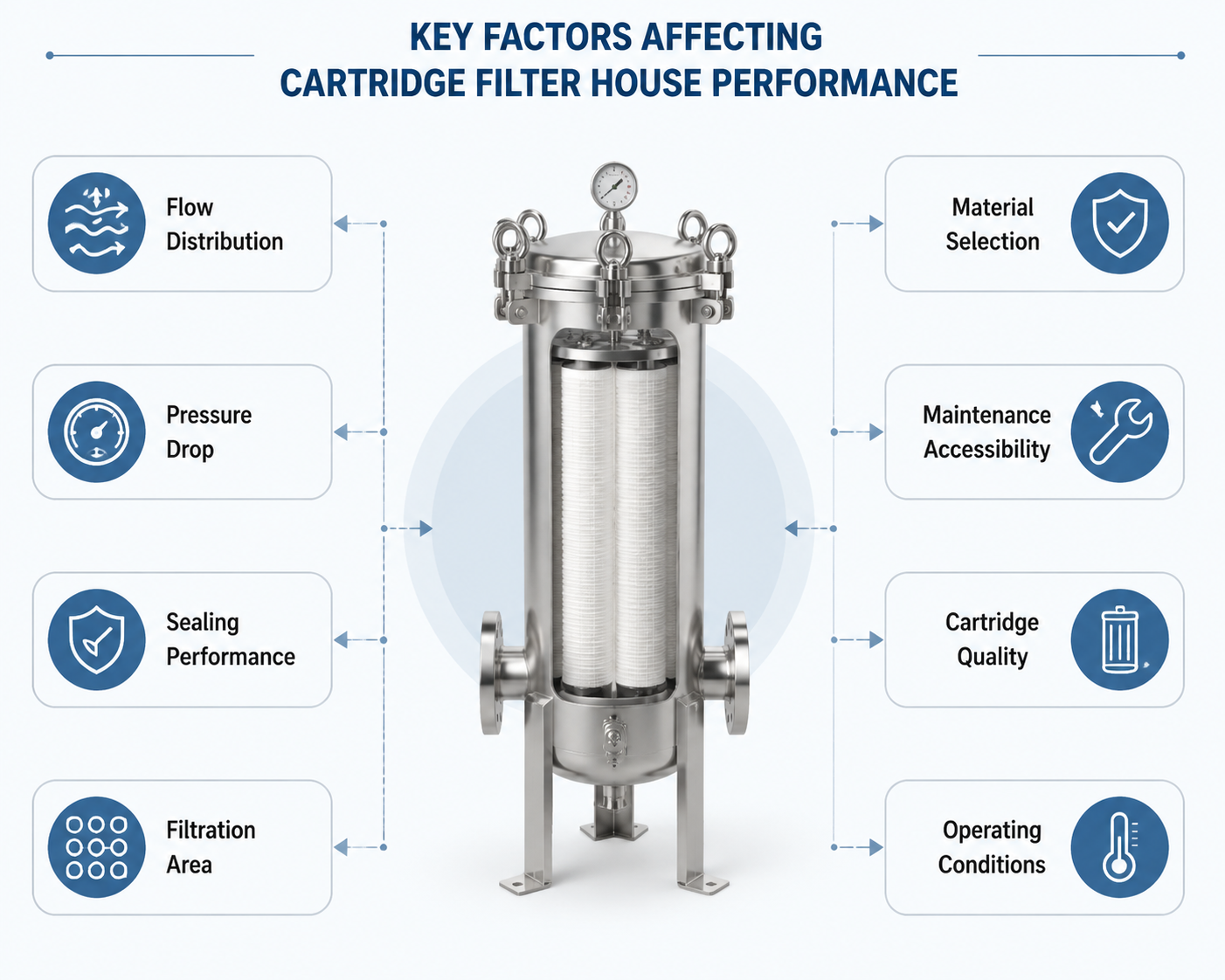
A cartridge filter housing must do more than simply hold filter elements. Its internal geometry, sealing structure, material selection, and flow path design directly influence pressure loss, cartridge utilization, maintenance frequency, and long-term operating reliability.
For this reason, selecting a cartridge filter housing should be considered as a system design decision rather than a simple equipment purchase.
A cartridge filter element is responsible for capturing contaminants, while the housing creates the operating environment where filtration takes place.
During operation, process fluid enters the housing and is distributed around the cartridge surface. The fluid then passes through the filtration media before leaving through the outlet.
If the housing design is not optimized, several problems may occur:
Uneven flow through filter cartridges
Higher local filtration velocity
Faster clogging in specific areas
Increased pressure drop
Reduced cartridge service life
Therefore, good housing design aims to create balanced flow conditions and allow the cartridge media to work effectively across its entire filtration area.
One of the most important factors in cartridge filter housing design is how fluid moves inside the vessel.
A poorly designed inlet structure can create turbulence or uneven flow distribution. In multi-cartridge housings, some cartridges may receive more flow than others, causing uneven contaminant loading.
A better design focuses on:
Smooth inlet transition
Balanced flow around cartridges
Reduced dead zones inside the vessel
Minimized unnecessary turbulence
Uniform flow distribution helps the entire cartridge surface participate in filtration, improving both filtration stability and cartridge utilization.
The number of cartridges inside a housing determines available filtration area and flow capacity.
For low-flow applications, single-cartridge housings may provide a compact and economical solution. For industrial processes requiring continuous operation, multi-cartridge housings are often se lected to increase filtration area.
However, adding more cartridges is not always the most efficient approach.
The housing designer must consider:
Required flow rate
Contaminant loading level
Allowable pressure drop
Space limitations
Cartridge replacement frequency
A properly sized housing maintains a balance between initial investment and long-term operating cost.
Pressure drop is a key indicator of filtration system performance.
Every filtration system creates resistance as fluid passes through the housing and cartridge. Excessive resistance increases pump energy consumption and may reduce process stability.
Housing design affects pressure loss through:
Flow channel size
Connection design
Internal structure
Cartridge arrangement
A compact housing may reduce equipment cost, but if the internal space is insufficient, the increased velocity can lead to higher pressure loss.
Therefore, efficient housing design requires matching the vessel size with actual operating conditions instead of simply selecting the smallest available option.
The housing material must match the chemical and physical conditions of the filtration process.
For general industrial applications, stainless steel housings are commonly se lected because they provide:
Mechanical strength
Corrosion resistance
Long service life
Easy cleaning capability
Different environments may require different materials.
For example:
Water treatment systems often prioritize corrosion resistance and durability.
Chemical processes may require higher alloy materials depending on fluid characteristics.
Food and pharmaceutical applications usually require hygienic surface finishes and easy sanitation.
The correct material choice reduces unexpected maintenance issues and extends equipment reliability.
Even when a high-performance cartridge is installed, poor sealing design can reduce actual filtration results.
The sealing system between cartridge and housing must ensure that all fluid passes through the filtration media instead of bypassing around the cartridge connection.
Important design considerations include:
Accurate cartridge positioning
Reliable gasket compression
Proper sealing surface machining
Compatibility with cartridge end configurations
A reliable sealing structure is especially important in applications requiring consistent product quality or fine particle removal.
Industrial filtration equipment often operates continuously, making maintenance efficiency an important consideration.
A practical cartridge filter housing design should allow operators to:
Replace cartridges quickly
Access internal components safely
Reduce downtime during maintenance
Perform inspection easily
Features such as optimized cover design, convenient opening mechanisms, and proper drainage arrangements can significantly improve the overall user experience.
A housing that is difficult to maintain may increase operating costs even if its initial performance is acceptable.
The inlet and outlet connections must match the existing pipeline system.
Incorrect connection design may cause:
Installation difficulties
Additional adapters
Increased pressure loss
Potential leakage points
Industrial cartridge filter housings are commonly designed with different connection options depending on application requirements, including threaded, flanged, and sanitary connections.
The connection method should consider not only installation convenience but also future maintenance and system expansion.
A well-designed cartridge filter housing provides several operational advantages:
Balanced flow prevents uneven loading and helps maintain consistent filtration performance.
Lower stress on filter media reduces premature clogging and replacement frequency.
Reduced pressure loss and easier maintenance contribute to lower lifecycle costs.
Reliable sealing and stable flow protect downstream equipment from unwanted contaminants.
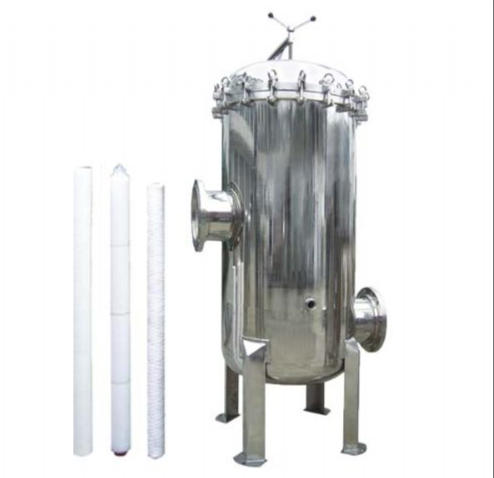
Cartridge filter housings are commonly used in processes where reliable particle control is required, including:
Industrial water filtration
Chemical liquid processing
Food and beverage production
Pharmaceutical manufacturing
Semiconductor and electronics industries
Pretreatment systems for membrane filtration
In these applications, housing design directly affects process stability and filtration reliability.
Yes. The cartridge determines the filtration rating, but housing design affects whether the cartridge can achieve its expected performance by controlling flow distribution, sealing, and pressure conditions.
A properly designed housing reduces unnecessary pressure loss, extends cartridge service life, and decreases maintenance frequency.
Because uneven flow distribution can cause some cartridges to become overloaded while others are underused, reducing overall filtration efficiency.
Important factors include flow requirement, operating pressure, fluid characteristics, material compatibility, cartridge type, maintenance requirements, and installation conditions.
Cartridge filter housing design is a critical factor in achieving efficient and reliable filtration performance. While the cartridge media determines particle removal capability, the housing controls how effectively that media operates within the filtration system.
By optimizing flow distribution, capacity selection, pressure control, material compatibility, sealing performance, and maintenance accessibility, a properly designed cartridge filter housing can improve filtration stability and reduce total operating costs.
For industrial users, the best filtration solution is not only choosing the right cartridge, but also designing a housing system that allows the cartridge to perform at its full potential.