Industrial filtration is essential for protecting equipment, maintaining product quality, and ensuring stable process operation. Across industries such as petrochemicals, water treatment, power generation, food processing, and manufacturing, filtration systems are continuously challenged by increasing flow demands, stricter environmental requirements, and the need to reduce maintenance costs.
Among modern filtration technologies, self cleaning filters have gained widespread adoption due to their ability to provide continuous filtration while minimizing manual intervention. Compared with conventional filters that require frequent shutdowns for cleaning or element replacement, self-cleaning systems offer significant advantages in operational efficiency and long-term reliability.
This article explores how self cleaning filters improve industrial filtration efficiency and the key factors that influence their performance.
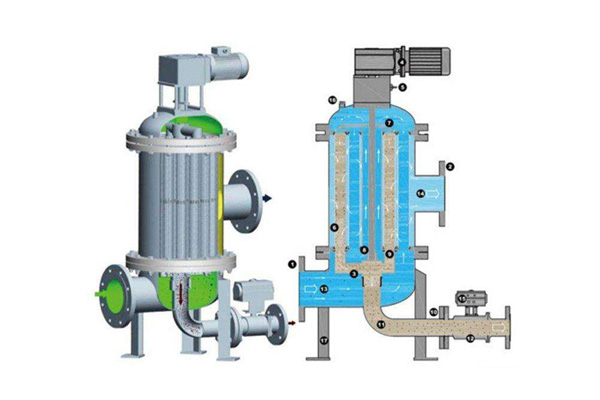
A self cleaning filter is an automated filtration device designed to remove suspended solids from liquids while periodically cleaning its filtration element without interrupting system operation.
Unlike traditional basket or cartridge filters that require manual maintenance, self cleaning filters use mechanisms such as:
Automatic backwashing
Suction scanning systems
Brush cleaning assemblies
Rotating screen technology
These systems continuously remove accumulated contaminants, allowing the filter to maintain stable performance over extended operating periods.
Industrial filtration efficiency is not simply about removing particles. It also affects:
Equipment protection
Process stability
Energy consumption
Product quality
Maintenance frequency
In petrochemical facilities, for example, inadequate filtration can lead to fouling of heat exchangers, pumps, valves, and downstream process equipment. In water treatment systems, poor filtration may reduce treatment efficiency and increase operational costs.
A well-designed filtration system must balance particle removal performance with flow capacity and pressure loss.
One of the primary advantages of self cleaning filters is their ability to operate without frequent shutdowns.
Traditional filters often require operators to stop the process, remove filter elements, and perform cleaning procedures. During this time, production efficiency can be affected.
Self-cleaning systems automatically remove accumulated solids while filtration continues, reducing downtime and maintaining process continuity.
As contaminants accumulate on a filter surface, pressure drop across the filter increases.
Excessive pressure loss can:
Reduce system flow rate
Increase pump energy consumption
Affect downstream equipment performance
Self cleaning filters help maintain a more consistent differential pressure by removing debris before excessive clogging occurs.
This results in more stable hydraulic performance throughout the filtration cycle.
Maintenance costs are a major concern in industrial operations.
Because self cleaning filters automate the cleaning process, facilities can significantly reduce:
Manual cleaning labor
Filter element replacement frequency
Production interruptions
Maintenance-related safety risks
For large industrial plants operating continuously, these benefits can generate substantial long-term savings.
Many industrial systems contain equipment that is highly sensitive to suspended solids.
Self cleaning filters help protect:
Heat exchangers
Spray nozzles
Pumps
Membrane systems
Cooling water circuits
By maintaining consistent filtration performance, these filters reduce the risk of fouling and extend equipment service life.
The filter screen is the core component of any self cleaning filter.
Performance depends on:
Slot or mesh opening size
Open area
Material selection
Structural strength
Wedge wire screens are commonly used because they offer high open area, low pressure drop, and excellent resistance to clogging.
Filtration efficiency varies according to:
Particle size
Particle concentration
Particle shape
Fluid viscosity
Selecting the appropriate filtration rating is critical for achieving optimal performance.
A filter that is too coarse may allow harmful particles to pass through, while a filter that is too fine may increase cleaning frequency unnecessarily.
The effectiveness of the cleaning system directly affects filter performance.
An efficient cleaning mechanism should:
Remove accumulated solids thoroughly
Minimize water consumption
Restore filtration capacity quickly
Reduce wear on filter components
Proper cleaning design ensures consistent filtration efficiency throughout the operating cycle.
Self cleaning filters are widely used in:
Protecting pumps, heat exchangers, and process equipment from suspended solids.
Removing debris from raw water, cooling water, and recycled water systems.
Protecting cooling circuits and auxiliary equipment.
Maintaining product quality while reducing maintenance downtime.
Providing reliable filtration for process water and circulation systems.
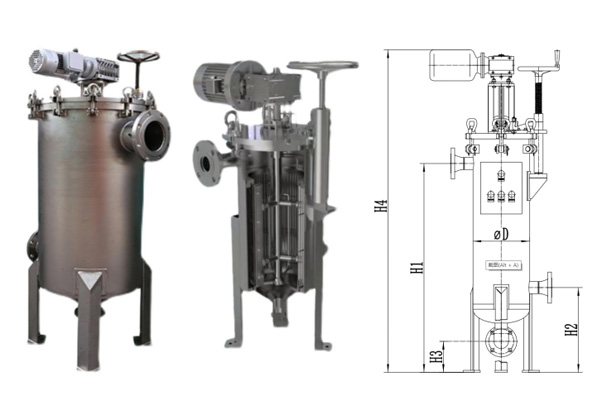
As industries focus on automation and operational efficiency, self cleaning filtration technology continues to evolve.
Current trends include:
Smart monitoring systems
Differential pressure-based automation
Remote diagnostics
Improved screen materials
Lower water consumption during cleaning cycles
These innovations help facilities achieve higher reliability while reducing operating costs.
Its primary advantage is continuous filtration with automatic cleaning, reducing downtime and manual maintenance.
Yes. Many industrial designs are specifically engineered for continuous, high-flow applications where manual cleaning would be impractical.
They reduce labor requirements, minimize production interruptions, lower maintenance frequency, and help protect expensive downstream equipment.
Petrochemical processing, water treatment, power generation, food processing, manufacturing, and cooling water systems are among the most common applications.
By maintaining stable flow conditions, preventing excessive clogging, and continuously removing contaminants without interrupting operation.
Self cleaning filters have become an important component of modern industrial filtration systems. By combining continuous operation, automated cleaning, and stable hydraulic performance, they help improve filtration efficiency while reducing maintenance requirements and operating costs.
As industrial facilities pursue greater reliability and process optimization, self cleaning filtration technology will continue to play a vital role in protecting equipment and supporting efficient plant operation.