Cartridge filter housings are widely used in water treatment and industrial process systems to remove suspended solids, fine particles, and contaminants from liquids. By enclosing one or multiple filter cartridges within a pressure-rated vessel, these systems provide reliable filtration performance while protecting downstream equipment. From municipal water treatment plants to pharmaceutical manufacturing facilities, cartridge filter housings play a critical role in maintaining product quality, process efficiency, and regulatory compliance.
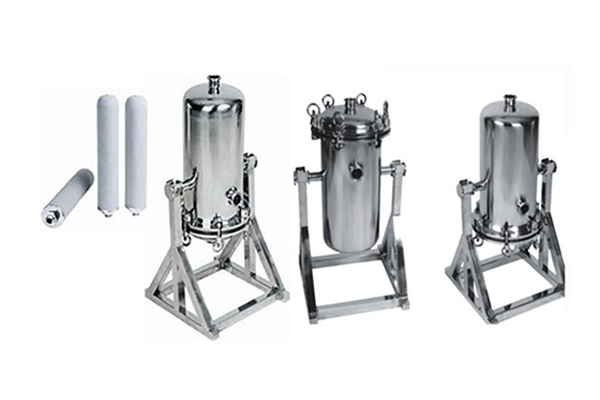
A cartridge filter housing is a vessel designed to hold replaceable filter cartridges that capture contaminants as fluid passes through the filtration media. Depending on the application, housings may accommodate single or multiple cartridges and can be manufactured from materials such as stainless steel, PVC, or UPVC.
Modern cartridge filter housings are available in various configurations, including 10-inch, 20-inch, 30-inch, and 40-inch cartridge lengths, allowing engineers to select the appropriate filtration capacity for specific flow requirements.
One of the most common applications is protecting reverse osmosis membranes. Fine sediment, colloidal particles, and suspended solids can quickly foul expensive RO membranes, reducing system efficiency and increasing maintenance costs.
Typically, 1–5 micron cartridge filters installed upstream of RO systems help reduce the Silt Density Index (SDI) and extend membrane service life by minimizing fouling and scaling.
Municipal water treatment facilities often use cartridge filter housings as a polishing stage before final disinfection. These systems remove fine particulate matter, turbidity, and residual contaminants, helping utilities meet drinking water quality standards while improving water clarity.
Industrial wastewater treatment facilities utilize cartridge filtration to remove suspended solids, oil droplets, and process contaminants before discharge or reuse. In cooling tower systems, cartridge filters help reduce particulate buildup that can cause scaling and equipment fouling.
Cartridge filtration is also widely used in commercial pools, spas, and recreational water facilities to capture dirt, debris, and microscopic contaminants, maintaining water clarity and reducing chemical consumption.
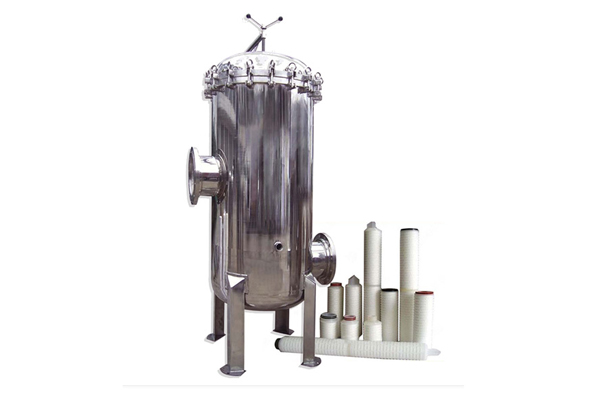
Pharmaceutical production requires stringent contamination control. Cartridge filter housings equipped with membrane cartridges provide sterile filtration and particulate removal, ensuring product purity and compliance with regulatory requirements.
In food and beverage plants, cartridge filters are used to treat process water, ingredient water, and final product streams. They remove suspended particles without affecting product taste, color, or quality.
Common applications include:
Beverage production
Brewing operations
Dairy processing
Bottled water manufacturing
Semiconductor manufacturing requires ultrapure water (UPW) with extremely low particulate levels. Cartridge filtration serves as a critical step in maintaining water purity throughout microchip fabrication processes.
Chemical processing facilities often handle corrosive fluids, solvents, and hydrocarbons. Stainless steel cartridge filter housings, particularly those manufactured from 316L stainless steel, provide the durability and corrosion resistance necessary for demanding operating conditions.
Proper housing selection directly affects filtration efficiency, pressure loss, and maintenance frequency.
Typical flow capacities vary according to cartridge length:
| Cartridge Length | Typical Flow Capacity |
|---|---|
| 10 inch | 1–5 GPM |
| 20 inch | 3–10 GPM |
| 30 inch | 5–15 GPM |
| 40 inch | 10–20 GPM |
For higher flow requirements, multi-cartridge housings containing 10 to 100+ cartridges can process hundreds of cubic meters of water per hour.
Pressure drop is one of the most important operating parameters in cartridge filtration systems.
A clean cartridge filter typically operates with an initial differential pressure of approximately 0.05–0.2 bar. As contaminants accumulate, resistance increases and pressure drop rises. Most facilities replace cartridges when differential pressure reaches approximately 0.7–1.5 bar.
Proper housing sizing helps minimize pressure losses while maximizing cartridge service life.
Material compatibility significantly impacts equipment longevity and operating reliability.
| Material | Corrosion Resistance | Typical Temperature Limit |
|---|---|---|
| SS304 | Good | Up to 120°C |
| SS316L | Excellent | Up to 150°C |
| PVC | Moderate | Up to 50°C |
| UPVC | Good | Up to 60°C |
For high-chloride water, chemical processing, or marine environments, SS316L is generally preferred due to its superior corrosion resistance. PVC and UPVC housings offer economical solutions for non-corrosive water treatment applications.
While both technologies are used for liquid filtration, they serve different purposes.
| Parameter | Cartridge Filter Housing | Bag Filter Housing |
|---|---|---|
| Filtration Rating | 0.1–100 μm | 1–800 μm |
| Filtration Accuracy | Very High | Moderate |
| Typical Application | Fine Filtration | Coarse Filtration |
| Dirt-Holding Capacity | Lower | Higher |
| Operating Cost | Moderate | Lower |
Cartridge filter housings are generally selected when fine particle removal and consistent filtration quality are required.
Beyond contaminant removal, cartridge filter housings deliver significant economic benefits:
Extend membrane and equipment lifespan
Reduce system downtime
Improve product quality consistency
Lower maintenance frequency
Decrease overall operating costs
In many RO systems, effective cartridge pre-filtration can significantly reduce membrane cleaning frequency and help extend membrane replacement intervals.
Consider an industrial RO plant processing 100 m³/h of feed water.
System configuration:
Multi-cartridge stainless steel housing
40-inch cartridges
5-micron filtration rating
Results:
Reduced suspended solids loading
Lower membrane fouling rates
Improved permeate quality
Extended RO membrane service life
Reduced maintenance and cleaning costs
This example demonstrates how proper cartridge filtration contributes directly to overall system efficiency and reliability.
Most RO pretreatment systems use 1–5 micron cartridge filters to protect membranes from particulate fouling.
Replacement is typically recommended when differential pressure reaches approximately 0.7–1.5 bar or when flow performance declines significantly.
For standard water applications, SS304 may be sufficient. However, SS316L is preferred in corrosive or high-chloride environments.
Yes. Stainless steel housings can often operate at temperatures above 120°C, depending on design specifications and gasket materials.
Cartridge filter housings provide finer filtration accuracy, while bag filter housings generally offer higher dirt-holding capacity and are better suited for coarse filtration.
Cartridge filter housings are essential components in both water treatment and industrial process systems. Their ability to provide precise particulate removal, protect downstream equipment, and support consistent process performance makes them a preferred filtration solution across industries. By carefully considering flow requirements, pressure drop, cartridge configuration, and material selection, engineers can optimize filtration efficiency while minimizing operating and maintenance costs.